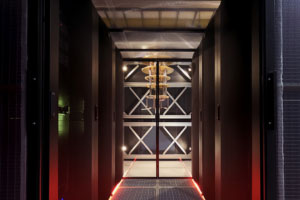
The announcement follows OQC's unveiling last month of its New York-based Quantum-AI Data Centre, powered by NVIDIA CPU/GPU Superchips, which marks a significant step toward scalable, real-world quantum computing applications. As part of OQC's logical-era quantum computer, OQC GENESIS, the ProteoxLX provides the ultra-low temperature environment and cooling power required to support the device, which features 16 logical qubits and is capable of delivering over 1,000 quantum operations.
The system will enable breakthroughs across finance, security and data-driven industries, from accelerating financial modelling and mission-critical optimisation, to powering next-generation AI and quantum machine learning.
The contribution underscores Quantum Design Oxford's growing role in the global quantum ecosystem. With data centre installations across Europe, North America, and Asia, OQC, in collaboration with Quantum Design Oxford, is contributing to a globally distributed quantum computing infrastructure. The companies are accelerating the practical deployment of quantum computing solutions, enabling applications across superconducting qubits for major industries such as the pharmaceutical sector.
“We're proud to support OQC in building the infrastructure that will define the next generation of computing, and it is a privilege to collaborate with our longstanding partner on this project," said Matthew Martin, Managing Director, Quantum Design Oxford. "Our ProteoxLX is designed to allow users to scale, enabling them to maximise qubit counts with a large sample space and capacity for coaxial lines, so we're excited to see how OQC will harness this platform to accelerate breakthroughs in real-world application performance."
Quantum Design Oxford's ProteoxLX, designed specifically for quantum computing scale-up and optimised to provide long-term reliability, stability and ease of use, provides the ultra-low temperature environment that qubits need to function. The system's market-leading modular, upgradable platform, which contains cross-compatible magnet systems, enables extensive user flexibility, allowing OQC to integrate increasingly complex superconducting qubit devices.
Simon Phillips, CTO, OQC, commented:
“Quantum Design Oxford's contribution supports the centre's goal of creating a hybrid quantum-classical computing capability, without modifying the data centre environment or generating the need for additional cooling."
Optimised for quantum computing, the ProteoxLX is part of Quantum Design Oxford's next-generation dilution refrigerator family, all featuring a shared modular layout for cross-compatibility and flexible cryogenic installations. It maximises qubit counts with a large sample space, ample coaxial wiring capacity, low-vibration features for reduced noise and long qubit coherence times, and fully integrated signal conditioning components. ProteoxLX delivers >25 µW cooling power at 20 mK, a base temperature <7 mK, and several watts of cooling capacity at 4 K via twin pulse tubes. It also includes two fully customisable Secondary Inserts for optimised cold-electronics layouts and high-capacity I/O lines, compatible and interchangeable across all Proteox systems (MX and QX).
Copyright © 2026 Quantum Design Oxford